Showing posts with label Supply chain. Show all posts

Monday, 28 July 2025

Procurement Training

Well its summer (still), and naturally everyone's minds turn to planning procurement training for the rest of the year.

No?

Just me then.

But a reminder that as well as working through a list of partner organisations, we also offer bespoke and off the shelf training programmes directly.  These can be either face to face or online.  

We offer courses covering a wide range of commercial skills, especially those related to procurement and supply chain management.  The courses are suitable for both public and private sectors, and often for both buyers and sellers.

Course topics can include;

- The Procurement Act 2023 (which is topical)

- Procurement & Supply Chain Management

- Supplier Management

- Contract Management (my lawyer friends point out I am not a lawyer, and I point out that is why I run this course - the focus is on getting what we want, not detailed legal issues)

- Commercial Negotiation

- Tender evaluation processes

- Commercial awareness

AND a range of other things in related areas.

If you are interested, drop me a note or give me a call.


Wednesday, 16 April 2025

Always look on the bright side of tariffs - part 2

 Well, at least with a tariff things are merely (a lot) more expensive.  It may lead to some suppliers dropping out of the market, and some products and services no longer being available....  but in theory they just add cost, inconvenience and drive inflation.


A bigger concern, which I think has been there but just not really a major focus of attention, is that China is not only a key manufacturer but a key source of raw materials.  Which they have tight control on.  Through the belt and road initiative they also exert control on some alternative sources of supply.

A particular choke point may be on rare earth metals (physicists joke that they are not rare, not earth and not even metals... but ignore us).

Controlling access to these essential elements used in advanced materials has long been a key Chinese economic strategy - and now they may just turn off the supply to the USA.  And the EU.

Not being able to get things at any price is a bigger problem than higher prices.

A couple of articles here and here.

Good luck out there.


Monday, 7 April 2025

Tariffs - wow!

 The world has changed.  It is not the same is it was on 31st March 2025.

I'm not in a position to tell you what to do in response, apart from to suggest that doing nothing is not an option.

The good news for Procurement and Supply Chain professionals is that our organisations now need us, and need us to be on top of our game.

Even if you management has not requested you to do so, I recommend you look hard at your existing supply chains and review your Risk Registers.  Consider what might change and what your options are (if you have any).

The situation is likely to remain fluid for quite some time.  Good luck!

Thursday, 16 July 2020

IChemE - Restarting Supply Chains - 5th August 2020


Whatever we think about the current pandemic  - whether concerns are overblown, whether it will be over soon, or whether it is serious and we are stuck with it for months - it is clear that there has been major disruption to supply chains.   We can hope that everything will very quickly get back to normal - but there is an element of wishful thinking there.

You might think that this is a great chance to restructure your supply chains - or that things will quickly revert to exactly what they were before.

With IChemE we are running an online seminar that helps to cover all of these topics, and will help you to think through your options and choices.  And we hope to cover the possible disruptions caused by the UK leaving the EU REACH regime a bit too.

As with any disruption, you can wish and hope - or you can plan and organise.  We hope to help you with your planning.

There is a guest speaker that we are not quite able to announce - watch this space.

Full details and booking arrangements are here.

Thursday, 11 June 2020

EuroMaTech Restarting International Supply Chains - date change to 19/20 July 2020

Just to let you know that the date of this seminar has been moved because delegates have asked us to change the date to July.

The link on the EuroMaTech website still says Sunday 14th June, but on that day I shall instead be taking part in a webinar on Crisis Management with four of our other tutors.  I may have mentioned it before - we have just had the run through.  It is a free seminar and you can register here.

Friday, 29 May 2020

Online Training courses

I have run quite a few online training courses recently, and now feel happy enough about the process to offer online training programmes to in-house clients.

Topics are of course for mutual agreement (the advantage of bespoke rather than off the shelf training), but training courses more or less ready to go are;

Reconnecting your Supply Chain
Public Sector Procurement
Procurement and Supply Chain Management
Managing Procurement Teams
Introduction to Contracts

If any are of interest, get in touch and we can have a chat.


Thursday, 28 May 2020

Webinar: Advanced Purchasing Management and Restarting your Supply Chain

The webinar I recorded for EuroMaTech is now online if you are interested.  It lasts about an hour an includes material from two courses, which I have melded together into something I hope is useful. The attendees seemed to like it.

The webinar is available here.

You will see that there are more webinars planned, which you can sign up to in the same place.

The Courses are;
Advanced Purchasing Management 21/22 June 2020
and Restarting International Supply Chains on 14/15 June 2020
http://www.euromatech.com/seminars/restarting-international-supply-chains

(Yes, I know that seems the wrong way round.  I can assure you it will work fine).

I hope to see you then.


Thursday, 21 May 2020

Webinar - Advanced Purchasing and Covid-19 27 May 2020

I am running a webinar for EuroMaTech on Wednesday 27th May 2020, at 9:30am UK (12:30 Dubai).  Details are here.  This is a brief taster for two courses we are running in June - Restarting your Supply Chain, and Advanced Purchasing Management.  I have re-worked some of the sample content so that it works as a standalone (I hope).

I may be biased but having tried the webinar software today, I like it.  Same sort of flexibility as Adobe Connect, but much simpler to use.

Hope you can join us.

Friday, 1 May 2020

a final post on oil

The folks at @tankertrackers (who ever they are) provide the above illustration of where the full oil tankers are at the end of April 2020.  Not quite as many as some illustrations have shown.  It is pretty nice though to be able to SEE the supply chains.  All of those ships are going somewhere - or hanging around storing oil until it is worth selling.

They also provide a nice illustration gif of who the major oil producing nations are.  Many people immediately think of the Kingdom of Saudi Arabia.  Actually, they are third.  Second is Russia, and top of the list is the USA.

https://twitter.com/i/status/1252265633674399744

Oh, and WTI is now round about $ 20/barrel.  Low but not negative.


Wednesday, 22 April 2020

Possible future course on Re-starting supply chains.

We are already running some courses online, and probably about to start re-working some for the middle east market.  Looking at the courses made me wonder if there might be interest in a new course....

When things do start getting back to "normal", it will not be like flicking a switch.  A lot will have changed in the supply market, and particularly in the demand market.  Supply chains take a lot of work to make them Efficient, i.e. Lean.  Which means that they will not be Resilient.  So, our lovely smooth Lean supply chains are going to splutter into life rather than spring back perfectly formed.  There will be lots of blockages, broken links and delays.
Some businesses will be out of business - others will have changed their mode of operation.
Should we still buy from China?  Or should we develop local suppliers (who may be more expensive at first).
What did our contracts say about Force Majeure and what should they say for the future?

If you think there would be interest in such as course, please do let me know.  I am particularly interested in what you think should be covered, and whether we can do it in 1 day or will need 2.

Take care of you and yours.

Friday, 17 April 2020

Covid-19 and the economy - it could be worse

Ok, I admit I might just be trying to keep my own spirits up, but the OBR (Office of Budget Responsibility) scenario review that says that the UK economy will shrink by 35% in Q2 (compared to Q2 last year) could be worse.

Think about it - it means that nearly two thirds of the economy is still functioning.  Now, in economic terms a 2% change is seen as significant and 10% is huge, but let's try and be positive.  The impact is of course very different in different industry sectors.  There seems to be a 90% reduction in Education (which I suppose we should expect given schools and universities are closed).  Similarly for hotels.
But manufacturing is only down 55% (only!) and utilities by 20%.  There is still some activity going on during lockdown.

So, what will it mean for procurement when lockdown ends?  Well, obviously there will still be considerable disruption to supply chains - there will be shortages, and delays - but also temporary gluts.  There will be an opportunity for some suppliers to temporarily charge premium prices until the market normalises.  There will also be opportunities for some canny buyers to get some bargain prices - but we shall have to be careful that we do not force too many suppliers out of business by insisting on prices that allow them only to liquidate stock and not to rebuild.

Being selfish, I hope that the crisis does lead to people having greater awareness and consideration of their supply chains.  Beyond that, I just want to try and keep my spirits up.  Hope you can too.

Thursday, 16 April 2020

HS2, Covid-19 and complexity

The news is that the government has given the go-ahead for construction work on Highspeed 2 to start, even though much of the country is still in lockdown.  There are a lot of people quite vociferous that this is not a good time to start, and some arguing that this is a good time to drop the whole HS2 project.

Well there is an argument for HS2 that it will free up more space for rail freight, which is a good thing.  And I'm more of a fan of HS3 (which if it ever happens, will be at such a future date that it will do me personally no good).  But those are discussions for another day.

What I wanted to do is discuss is why one factor in this decision is rather unexpected, and an example of the interconnectedness and complexity of our economy.  Yes, starting work keeps some people in jobs and keeps some money flowing in the economy and it is probably better to get some building done for that money rather than pay people 80% to be furloughed.  And yes, it is a big project so might as well get started.  And yes, having started people will be reluctant to stop because of the sunk cost fallacy.  But I'm not thinking of any of those.

Not starting HS2 now might have an impact on the NHS and our fight against Covid-19.  How so?
Well, when we start the construction work we will need concrete - which means that the cement kilns need to be kept going when otherwise they might shut down because of low demand.  And if you know about cement kilns, they are not as quick and easy to shut down and start up as a gas fire.  But we need to look further down the supply chain.  Cement kilns use a lot of fuel.  Where do they get it from?  They use a variety of sources, but one of them is re-processed chemicals that where originally used in the pharmaceutical industry as solvents.  These can be reprocessed to some extent but they can also be blended up as fuel for cement kilns.  What do we do with them if they aren't sent there?  There are only 3 choices - storage, incineration, and shutting the pharmaceutical production.  Storage capacity is not huge, there isn't enough incineration capacity, and it has to go somewhere if you produce it.  So, you say - build more storage.  Why?  We don't need it when the virus is over.  Burn it - well we'd love to have more incinerators, because we are already at maximum capacity, but do you want one in your backyard?  And building incinerators is quick and easy compared to the process for getting permits.  So, if there is nowhere to dispose of the waste (short term), the option left is to close pharmaceutical production - which is obviously not ideal during a pandemic.

So, starting work on HS2 keeps the kilns fired up using fuel from the pharmaceutical industries, which helps the NHS.  A complex web... isn't it?

Wednesday, 15 April 2020

COVID-19 and the complexity of supply chains.

It is a rather unpopular point of view these days, but the world is rather complex.  Things seem very simple on the surface, but rather like a swimming swan, there is a lot going on under the water line.

Our supply chains - basically - just work.  It no longer seems miraculous to us that we have strawberries in January, and can order a coffee spoon from around the world for 90p  (I did.  It came from China via Guadalcanal).

The current lockdown has made us all more aware - many of us can barely remember shortages, let alone for multiple products at the same time (toilet paper, pasta, flour....)  Our supermarket supply chains are so optimised that a relatively small increase in demand (from both panic buying, and an increased demand now that more of us are eating 3 meals per day at home instead of only 2 or even 1) has meant empty shelves.  In classic Inventory Bullwhip fashion, this has lead to people increasing order quantities (as we supply chain folk like to call panic buying) and increased stockholding (aka hording) leading to even more shortages.

The supply chain IS reacting.  But having optimised for efficiency it is difficult to reformulate for effectiveness.  So we have people like the wholesale suppliers (no longer able to supply restaurants) being willing to supply the public - but only providing flour in 12kg sacks.  It will get there.  And may be people may be just a little bit more aware of what a miracle it is.

But a word of warning - you can hardly buy a webcam for love nor money.  And they mostly come from China, and are not likely to be the number one priority as things normalise there.  So, some shortages will continue for quite some time.  Sorry if you intended starting a podcast.

Wednesday, 19 October 2016

Marmite and Brexit

So the great "Marmite dispute" between Unilever and Tesco is over, but what did we learn?

There is a "Remain" analysis here at the Independent , an over from the FT here, and a Brexit analysis here at the Sun.

There is an interesting analysis that shows both sides suffered reputational damage (Marketing Week), but that of course is what promotional budgets are there for.

What we can be clear about is that this negotiation will be going on between Unilever and ASDA (and Morrisons etc.) and between P&G and Tesco (and ASDA, Morrisons etc.).  In fact they go on all the time.  This particular spat was very nicely timed for me because I had just been discussing with delegates a hypothetical similar battle between Tesco and Coca-Cola.

Unilever will be trying to maintain their profit margin, which is about 10%.  Tesco will be doing the same on a profit margin of about 1.7% (which is way down from the 5% or so it was earlier in the decade).  So on the face if it Unilever has lots of room to deal with material cost rises caused by the falling pound/euro exchange rate.  But why should it?  It's stock price will be in part based on the strong margins, so accepting lower margins would be a doubly whammy. 

Tesco of course in this cannot afford to absorb 15% price rises, and gets to look like the good guy looking after customer interests.

This negotiation between the 2 will go on all the time - it is just rather public this time, though interestingly the resolution is not as public as the spat.

Over time prices will rise - the weak pound means that imported raw materials will increase in costs, and products Unilever makes overseas will cost more when imported (they have no reason to reduce their internal transfer price and reduce profits elsewhere).  The public will pay more. 

Another factor is that the big discount competitors (Aldi, Lidl, Netto) are European and so their own brand products (if made in the EU) will also cost more in sterling.  Despite the competition, all the supermarkets have an interest in prices going up, none can afford to absorb the exchange rate impact, and none of their suppliers will do so either.  The size and speed of the drop means that currency hedging will only have limited some of the impact, and only for a limited time.

So what is the impact?  Sterling has fallen about 15%, but in any manufactured goods the cost of materials is only part of the total cost (maybe half or two thirds) so if products are made in the UK we might expect prices to go up 7.5% or 10%, and if imported 15%. 
In addition petrol and diesel prices should rise because oil is priced in dollars. Luckily (in a way) most of the pump price is tax and so the increase will not be 15% or anything like that.

Overall some commentators who know supermarkets are saying prices will on average rise by about 5%, which is low compared to the drop in sterling.  Efficiencies, competition, UK costs and other factors will keep it low.  Inflation will rise - for a year.  Assuming that there no further drops in sterling then this will be a spike in inflation unrelated to consumption and demand, which is why the Bank of England seem rather relaxed about it.

What does it mean for Buyers?  It means overseas products will be more expensive.  And that I wish I had bought my Euros for next month's holiday in France a month ago rather than waiting.  And bizarrely, I might be taking my own wine to France!


Tuesday, 19 April 2016

The price of oil - a case for investing in training

This week I am due to be in Dubai presenting courses on Procurement and Supply Chain Management.  Instead I am at home writing material for the Chartered Institute of Procurement & Supply, which in some ways suits as it is nice to have a few days in a row to write rather than clutching hours here and there.

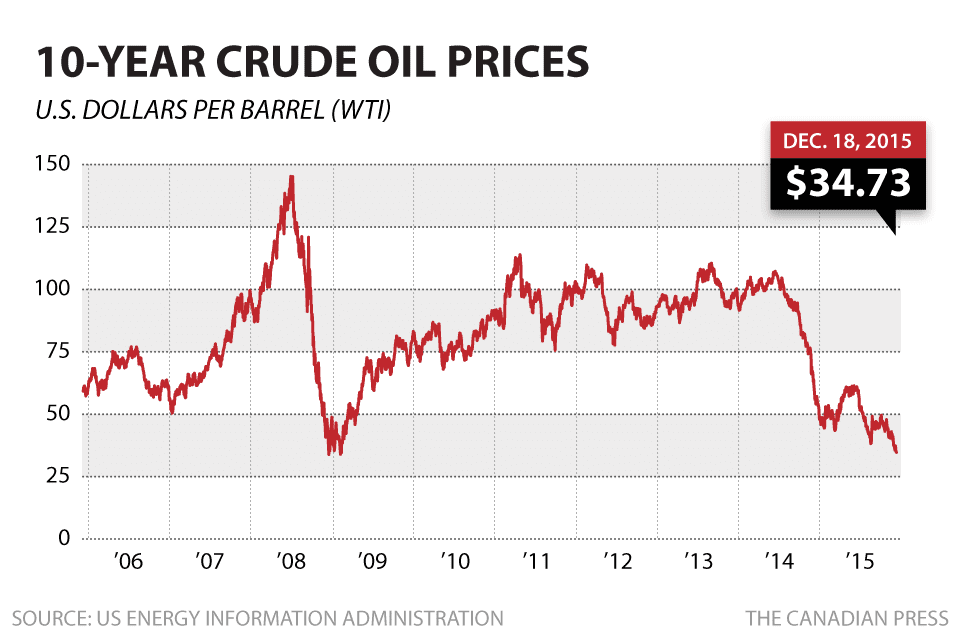
So far this year we have cancelled 5 weeks worth of courses in or for the Middle east, which is not surprisingly dominated by the oil and gas industry.  The dramatic fall in the price of oil (currently about $41/barrel down from over $100) has meant a massive cut in spending on training across the ME and in particular the oil and gas sector.

Now I have a vested interest in this because I work as a trainer, but I think we should make the case that training in procurement and supply (above other things) should be protected because it should pay for itself.

The usual argument is that when there is a financial shock it is sensible to cut back on discretionary spend - don't spend money unless you have to.  And I don't argue with that. 

However Procurement in the oil and gas industries in recent years has been focussed on Quality, delivery, availability, effectiveness and other non-price issues.  The high price of oil, and the relatively high margins it gave, meant that Price was not the dominant issue.  Now we are in a different environment.

Now Safety and Quality are things that cannot be comprised in process industries, but we can pivot to put far greater emphasis on price and cost rather than issues such as flexibility or efficiency.  That does require a change within the organisation, and a change in emphasis for the Procurement team and Suppliers.

In some situations that may mean a focus on partnership and joint cost reduction.  In others it may moving to a much more adversarial relationship than before.  The trick is in deciding where and when.

Which is where training comes in.  Training is not just about learning new things.  It is also where we can go back to basics and build up again in a new pattern.  It is where we can challenge established ideas and established ways of thinking.  It is where we can learn from others and test new concepts in a risk free (or low risk) environment.  In good training it is where we can plan how we are going to deliver in this new world.

In short a Procurement and Supply Chain training course could, and perhaps should, allow delegates to come away to save ten or more times the cost of the training.  At the least delegates should come away with some plans to save the cost of the event within a tight timescale (perhaps 3 months).  Those savings will then repeat over coming months adding multiples to the overall cost reduction.

The Return on Investment on Procurement training is high anyway, but when you need to save a lot of money in a hurry it is even better.  Particularly if it allows you to avoid making "savings" that will in the end cost more through lost production.

OK, you can say that I am self-serving in making this argument, but I think it makes sense.  In a losing football team you need to stop conceding goals.  You don't do that by getting rid of the Goalkeeper.

Thursday, 27 March 2014

The coming Spring: Procurement and the Recovery

The evidence is stacking up that the UK is in recovery mode.  Now there are a couple of points about that. Firstly, it may not feel like a recovery – but my experience is that it never does until the recovery has been going for a year or two.  Maybe more.  Secondly the recovery is never uniform.  Rather like my favourite quote “the future is already here – it’s just not evenly distributed” (William Gibson) all recoveries start off patchy before they “float all boats”.  So there are going to be mixed recessionary and growth signals for months to come. 

So what does this mean for procurement?  Well it requires a bit of thinking and a change of behaviour. 

When your popcorn is ready to eat the rate of pops drops, but if you wait for them to stop altogether you have overcooked it. If you wait for all signs of recession to be gone you will be in the midst of the boom.  The number of suppliers going out of business will drop, but some will still fail even though the finish line is in front of them.  Continue to be careful about the financial health of suppliers.  The recovery can finish off some companies because of the need to increase capacity, hire new staff, and rising input prices which is hell for the Cashflow.

The recession was all about forcing down prices, and costs out.  This often meant wage freezes and hiring freezes.  So there is no pent up demand for wage rises, which will eventually have an impact on prices.  Suppliers are going to be much less willing to agree bottom rates in return for guaranteed work – a long contract could leave them exposed.

A lot of suppliers mothballed or closed capacity during the recession.  This means firstly that they have to invest to re-open that capacity, and secondly that there might be supply shortages.  Both of these will also tend to increase prices, but availability might be low.  Suppliers will sensibly bottom slice their lowest margin business, so if you are still in “recession mode” pressing for the lowest possible price then you might struggle for supply.  Once survival is guaranteed suppliers are going to look for the “fat” to put on their bones for next time.

Many suppliers ran staffing at minimum levels.  As the recovery develops the job market will open up, and staff will be looking for promotions just as suppliers need more personnel to cope with increasing demand.  So again there are likely to be price rises and gaps.

And suppliers may no longer be quite so keen on your work.  If there is more to go round, they can be more selective.  If they have a limited supply and can get good prices wherever they go, then they will select customers on other critieria – like how you treated them during the recession.  It’s a bit late to worry about the consequences of that now, but you might want to find ways to apologise for beating them with a big stick for the past 5 years.  Or of course to remind people about your support of them during hard times.

So, just remember that things are changing, and change is dangerous.  Make sure you are not stuck in the mind set of the past five or six years and suffer as a result.
(The cherry blossom in Leeds always told me that Spring was on the way or here already)
 

Monday, 10 September 2012

Fundamentals of Supply Chain course

I shall be running a 4 day Fundamentals of Supply Chain course 15th to 18th October in Hastings, which is a lovely UK sea side town on the south coast.  This is going to be a small number  of delegates so any one interested in joining in please let me know - it will be a chance to have a course in a really small group and get personnalised support. 

Details are here.


Thursday, 8 March 2012

SMEs still miss out on Public Sector Contracts

Today's Yorkshire Post (Thursday 8th March 2012) contains an article about SMEs and public procurement with extensive quotes from me.   My summary is that the government is talking a good game but more needs to be done to make sure it actually delivers the engagement with SMES that will benefit our economy.

The article is here

Friday, 24 February 2012

More courses for 2012

I am pleased to announce that we shall be delivering some extra courses in 2012 for our training provider partners.
These are;
Delivering Compliant Evaluation Processes for BIP Solutions - Manchester 20th March 2012, and Leeds 10th April 2012
International Trade and Shipping, for EuroMaTech in Amsterdam, 7-11 May 2012
Supply Chain and Inventory Management for EuroMaTech in Istanbul, 16-20 July 2012, and
Purchasing Negotiations Workshop for EuroMaTech in Dubai, 4th to 8th November 2012.

Booking is through the relevant partner organisation.  I shall be happy to direct you to them if you wish.

Hope to see you on one or more of these events.   The course on compliant evaluation processes is I think very useful for anyone involved in UK Public procurement.  I have been involved in a number of procurement processes that would have benefited from thinking about evaluation in more depth earlier in the tender process.

Monday, 31 October 2011

Training course changes

The current economic climate is obviously having an impact on businesses, and as a result we have been forced to cancel the three courses in project management scheduled for November and December.  We shall look at arranging new dates in the new year.  In the meantime if you are interested in the Project Management courses, please let me know and we can see what can be arranged.

Numbers have been low for a number of seminars, and I am sure that businesses are cutting back on their training activities.  Hopefully this is only for a short while.  When business is slow it is a good time to get staff to refresh their skills, confident that they will not be taking them elsewhere in the near future.  However it is hard to be that positive about the future, and many businesses take the attitude that training is a discretionary spend that they will cut.  Obviously I am biased in this discussion, but I have put my money where my mouth is and paid to improve and broaden my skillbase and I feel it paid off.

In more positive news about training, we hope next year to have a very exciting series of training events in London.  Most will be about procurement and supply chain, but there will be a broad range.  More details to follow.