Showing posts with label costs. Show all posts

Friday, 5 August 2022

Inflation and hard times

 Well, if you don't value your Procurement team now, when will you?

And of course your sales team, operational team and in fact everyone in your business.  But just at the moment your Procurement team are really key.

I'm not terribly good at noticing prices in shops (which tells you that I earn enough money to not be worried about every single penny, unlike too many other people).  But even I have noticed prices going up.  And not just by the nominal 10% or so that is the current inflation rate.

MacDonald's have increased the price of their cheeseburger.  But not by 10% but by 20% (from 99p to 119p).  And if you look around the supermarkets you will see they are far from alone.  Lots of products have broken past the psychological £1 barrier, and gone up to £1.20 or more.

Now this may well reflect real changes in supply conditions and the cost of materials.  I don't know.

But what I do know is that we complain more or less the same about a 20p rise as we do a 15p rise, or a 10p rise.

So sensible sales teams will take the approach that, having had prices held back for years by relatively low inflation, and with customers all expecting there will be inflationary increases, the thing to do is go large!

Why have lots of incremental, annoying price rises?  Go for one big one, and hope to get ahead of the game a bit and increase profits in the process.  If inflation is 10%, why not go for 20%.  Or 30%?  If you can't put up prices now, when can you?

And this is where your procurement team comes in.

We know that for manufactured goods the cost of materials is usually about half the overall cost.  So, if inflation is 10%, we should expect to see a 5% rise not 10%.  After all wages have not yet increased by much, so not all costs have gone up.

Of course, industrial prices are rising even faster than domestic prices (15%+) and I am not suggesting that suppliers can hold down prices for ever.

But as a buyer we should be testing and checking.  Understanding our supplier's position, but also expecting that prices will fall equally quickly rather than being a new baseline.  That prices have increased an appropriate amount, rather than more than is necessary.  Making sure suppliers know we are happy to have monthly price negotiations rather than one big rise.  Maybe some kind of quarterly or annual rebalancing as prices vary.  This is the time when we show our value to organisations.

And of course your sales team should be putting up prices.  Yes, that is how inflation rises. But eroding profit margins are not a good idea either.

Yes this does mean that PAWA Consulting fees will be going up to.  Book now to avoid the rush (as they say).


Thursday, 8 February 2018

Zebra fuel

Listening to the BBC I came across Zebra Fuel, who are a start up in London who will come round to your house and fill up your car.  They claim to be no more expensive than your local petrol station.  Which in London is apparently turning out to be not so local.

In the North of England where I live land is not so important.  But London has reached some quite staggering land and property values.  I am constantly amazed that the commercial infrastructure continues to work as for almost any business in London there is more money to be made by closing the shop and selling the building than can be made in a generation of hard work.  Ok, I have not done a detailed financial analysis, but I hope you can see where I am heading.  The average 2018 property is selling for £600 000.  Working on a 5% profit margin a shop has to bring in £12m to make that much money over a period of 24 years, say £500k per year, that is £10k/week, or £2k per day.  How many shops turn over that much?  Actually for a petrol station most, as that is only 40 fills - though really probably 80 would be needed as petrol only has profit margins of about 2.5%.

Anyway my point is that if you own a petrol station in central London you can have a quick windfall by selling it for development, or a long slow slog to make the same amount of money.  (let's not worry about future property values, and net present value of money over 24 years...).  Which would you do?

Petrol stations therefore are closing, and likely to continue to do so.  Electrical vehicles will only make this trend worse in the medium term.The prevalence of small corner shops and Supermarket Local branches means that the petrol stations other role as the shop of last resort is covered.

Zebra therefore makes sense as a value proposition - they can invest in out of London depots and delivery vehicles (ironically possibly electric to avoid the congestion charge), which may turn out to have lower costs that being physically based in London.  The customers don't waste their time finding a petrol station and then filling up.  So in theory there could be lower operating costs, and customers (in future, once the principle is established) willing to pay a premium for convenience.

Sounds very plausible. 

Apparently they have ambitions for Paris, but I suspect it will take a long time to come to Yorkshire.

It reminds me of a company in Manchester called Diesel Weasel who would go round and top up generators on construction sites on a daily basis.  They are no longer around (it appears) but I think Zebra have a good chance.  In business you never get more than that.

Monday, 6 June 2016

Which savings? How do we prioritise?

Last week I was in Germany, working for a multi-national engineering manufacturing company.  Great place and great people.  The Procurement Manager took us out to dinner, and I took the opportunity to ask him what his major problems were.  He took a few seconds to think (a sensible man), and then described his situation.

All the business units have to make savings - everyone is clear about that (although margins and profits are up across the board).  However he is locked into his approach.  Effectively there is a triple lock;
1. Price reductions
2. Working capital reductions
3. Zero inflation.

All laudable goals, but of course the interaction of them leaves him very little room to manoeuvre with suppliers.  A contractor cannot be award for good performance on a 3 year contract with a say 0.5% increase, regardless of the changes in their input costs.  Higher stock levels and fewer deliveries or longer lead times cannot be used to incentivise the agreement.

To make things even worse, the product mix is highly variable and unpredictable and sales are not located on site.  So if they sell in the EU working capital can go down when the manufactured item is invoiced to the customer.  If the customer is in China and terms are DDP, then it will only leave stock (accounts) 5 weeks after it has been dispatched from the factory when it arrives at the customer.  The procurement department has no input to that, but of course has to deal with the WIP issues.

Tricky.

So the Manager has to achieve all of his targets both individually and collectively, and there can be no trade off.  He was very unhappy when I raised the sort of tricks that business managers often use to make those targets - he is going to do it properly.  I am sure he will, but it is a situation where a little more flexibility might actually help achieve the overall targets.  In particular I worry that Quality is at risk if they have to switch to new suppliers rather than stay with established ones simply in order to gain lower prices.

Wednesday, 20 April 2016

Retention discounts, or the dangers of loss leading bids

I went to a very interesting evening at the University of Bradford School of Management Knowledge Transfer Network, which featured featured Nigel Greenwood of Simply Customer talking about the Customer Journey, and Martin Haley talking about segmentation.

Martin mentioned the old Marketing rule of thumb that it costs 6 times as much to win a customer as to retain one.  And that triggered a few thoughts about procurement.

The costs of bidding for business are considerable, whether it is a formal tender process or a more traditional business to business relationship of meetings and negotiation.  Having won a contract, obviously the business has to perform well in order to retain it, but assuming it does then there is and advantage to both sides if the relationship continues.

My question is whether Procurement think about this sufficiently, and whether we put enough emphasis on squeezing prices in return for extending contracts.  Obviously it saves procurement time and money in avoiding a new bidding process, but there are a few processes going on that we might not think about in sufficient detail.

The cost of sales is obviously shared across all potential customers that suppliers target, but if we are already contracted then the cost of sales to us should be lower.  Perhaps not by a factor of 6, but certainly by 2 or 3.  Do the pries charged during the extension reflect that?

In addition we can think about the well known experience learning curve (or Boston Learning curve) which has been demonstrated back to the days of the Model T Ford.  The more units made, or the more times we carry out a service the more efficient we get.  The relationship is a log-log one, so is commonly portrayed as a curve where every time we double cumulative production the cost per unit goes down by a certain amount.  This obviously does not happen without some effort on the part of the Supplier, but is an indication that longer contracts become particularly attractive to suppliers as set up costs are written off and experience learning reduces the cost of delivery.

Taking this into account, some suppliers will initially submit a loss leading price assuming that profits will come later in the contract.  If we start targeting those savings then the supplier risks making less money than anticipated - hence the phrase that loss leading leads to a loss!

When considering the end of a contract, it is common to more or less roll over the existing price - maybe taking into account variables such as inflation and raw material costs.  Should we be looking instead to have price reductions taking into account the reduced price of sales AND experiential learning. 

There is no such thing as a free lunch, and we might see that initial prices rise if we want to share in the future efficiency savings - but it is something we probably should think about a bit harder.

Tuesday, 19 April 2016

The price of oil - a case for investing in training

This week I am due to be in Dubai presenting courses on Procurement and Supply Chain Management.  Instead I am at home writing material for the Chartered Institute of Procurement & Supply, which in some ways suits as it is nice to have a few days in a row to write rather than clutching hours here and there.

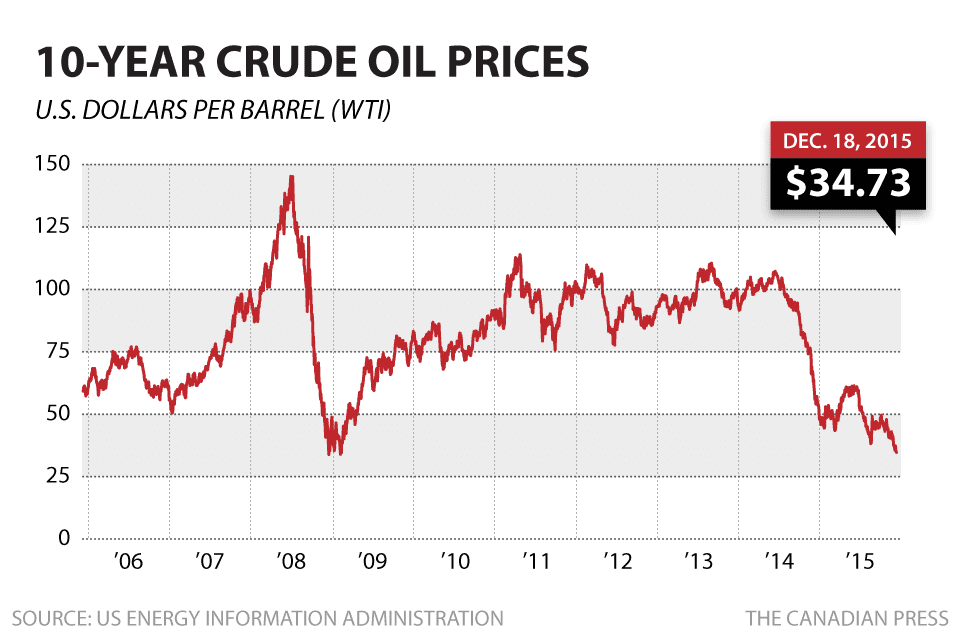
So far this year we have cancelled 5 weeks worth of courses in or for the Middle east, which is not surprisingly dominated by the oil and gas industry.  The dramatic fall in the price of oil (currently about $41/barrel down from over $100) has meant a massive cut in spending on training across the ME and in particular the oil and gas sector.

Now I have a vested interest in this because I work as a trainer, but I think we should make the case that training in procurement and supply (above other things) should be protected because it should pay for itself.

The usual argument is that when there is a financial shock it is sensible to cut back on discretionary spend - don't spend money unless you have to.  And I don't argue with that. 

However Procurement in the oil and gas industries in recent years has been focussed on Quality, delivery, availability, effectiveness and other non-price issues.  The high price of oil, and the relatively high margins it gave, meant that Price was not the dominant issue.  Now we are in a different environment.

Now Safety and Quality are things that cannot be comprised in process industries, but we can pivot to put far greater emphasis on price and cost rather than issues such as flexibility or efficiency.  That does require a change within the organisation, and a change in emphasis for the Procurement team and Suppliers.

In some situations that may mean a focus on partnership and joint cost reduction.  In others it may moving to a much more adversarial relationship than before.  The trick is in deciding where and when.

Which is where training comes in.  Training is not just about learning new things.  It is also where we can go back to basics and build up again in a new pattern.  It is where we can challenge established ideas and established ways of thinking.  It is where we can learn from others and test new concepts in a risk free (or low risk) environment.  In good training it is where we can plan how we are going to deliver in this new world.

In short a Procurement and Supply Chain training course could, and perhaps should, allow delegates to come away to save ten or more times the cost of the training.  At the least delegates should come away with some plans to save the cost of the event within a tight timescale (perhaps 3 months).  Those savings will then repeat over coming months adding multiples to the overall cost reduction.

The Return on Investment on Procurement training is high anyway, but when you need to save a lot of money in a hurry it is even better.  Particularly if it allows you to avoid making "savings" that will in the end cost more through lost production.

OK, you can say that I am self-serving in making this argument, but I think it makes sense.  In a losing football team you need to stop conceding goals.  You don't do that by getting rid of the Goalkeeper.

Monday, 20 July 2015

NHS Pricing on labels

Jeremy Hunt, the health secretary, is leading an initiative to put indicative prices on all NHS medicines over £20.  Though I have been negative about some government initiatives, this is one I support - though before you swoon in surprise I have to point out that I think the strapline "paid for by the taxpayer" is cheesy and unnecessary.  (I am though quite in favour of the proposal of a chap on BBC Question Time that MPs should have to wear the same line on a badge on their suits - but maybe it doesn't go far enough and we should insist they all wear HM Parliament boiler suits branded with that as a logo.  But I digress)

People are very unaware of the costs of the NHS.  A prescription costs £8.20.  I am not sure how much of that is actually administration costs (and I cannot find it - perhaps you know?) but given that a private prescription from a doctor may cost £15, and according to CIPS a Purchase Order typically costs £50, I believe that in fact ALL that charge is administration cost (and probably does not cover all of those costs).  So we literally do not pay for the pharmaceutical at all - just contribute to the administration of the process.

Which of course leads to the usual complaints that is is cheaper to buy Asprin over the counter than to get it through prescription.  People do not realise what they are actually paying for.

Let's do some back of a fag packet assessments.  (now that few people smoke, what can we use instead of fag packets?  Just asking)

Nearly 20 years ago my wife was taken ill in the USA.  Though we had medical insurance the bills we received (and had to pay before claiming back the money) where a real eye-opener.  The initial 5 minute consultation with a doctor was $50 - he said "go to hospital".  Kerching.  We went to hospital, where my wife had a 5 minute consultation ($150), and got a prescription for antibiotics, which cost us $80 at a nearby pharmacy.  Total cost $280 plus a bit of driving around.

Recently my son broke his ankle here in the UK.  A NHS doctor's consultation (she said "go to hospital"), a 5 minute consultation with a nurse, an x-ray, 5 minutes with a doctor, plaster clinic, and loan of crutches cost us £2.50 in car parking fees.  Subsequent new rubber ferrules for the crutches, x-ray, removal of cast, 5 minutes consultation with doctor cost us a further £2.50 in car parking fees.  A total of £5 and a bit of driving.

Looking on the internet the cost to the NHS might be £4 for the ferrules alone.  (Ferrules was a new word for me, so I am getting maximum mileage from it)  Based on salary cost of £50/hour that is £25 of staff time at minimum.  We haven't even considered overheads, infrastructure etc.

Based on my US experience I would expect that the cost might have been say twice what we paid 20 years ago, so $560 or £350.  According to this website that might be the lower end of a range that could run from $520 to $1000, or even $2500.


If you get something free you tend not to value it, but to take it for granted.  The NHS is free at the point of use, which is great because I did not need to consider the cost or call my insurance before taking my son to the doctor.  However I then did not actually value the service accordingly.

Incidentally my kids were born by emergency Caesarian section back in 2002.  The average bill for that in the USA according to a 2011 study by Truven Health Analytics was $50 000.  For that operation, and a month in Intensive Care Baby unit we paid just some car parking fees.   I call that a bargain.  How much of a bargain, I only realised by doing some research.

If I had been presented with an indicative bill for that service, then perhaps it would put the complaining about the price of parking into a bit of perspective.

The illustration incidentally is for a US bill for treating a snake bite.  Ouch and ouch again.