Showing posts with label Oil. Show all posts

Friday, 1 May 2020

a final post on oil

The folks at @tankertrackers (who ever they are) provide the above illustration of where the full oil tankers are at the end of April 2020.  Not quite as many as some illustrations have shown.  It is pretty nice though to be able to SEE the supply chains.  All of those ships are going somewhere - or hanging around storing oil until it is worth selling.

They also provide a nice illustration gif of who the major oil producing nations are.  Many people immediately think of the Kingdom of Saudi Arabia.  Actually, they are third.  Second is Russia, and top of the list is the USA.

https://twitter.com/i/status/1252265633674399744

Oh, and WTI is now round about $ 20/barrel.  Low but not negative.


Tuesday, 21 April 2020

Wow 2!

Further to yesterday's blog about Canadian oil, during the evening the price of WTI plummeted well into negative figures.  Most of this is actually a technical issue - yesterday was the day for completion of futures contracts and when people had to take actual possession of the oil (rather than just trading it).  The problem is that there is not sufficient oil storage, and so people with a contract where they had agreed to take oil had nowhere to put it - so they needed to dump it on people who could take it.  At any price.

Hence the collapse.  And why Brent crude did not collapse in the same manner - people have sufficient storage.  For now.

The market is still in Contago - where the price for future product is higher than the price for immediate delivery.  Normally this leads to people buying ahead of need and storing - which both drives up the price today, and lowers the price in future.  For now the future oil price still seems to be somewhere in the $20s.  Storage is getting very full.  We don't have any real clarity on when things will get back to "normal".

So, expect more fun and games in future.  Realistically, expect oil producers to start shuttering facilities that they think can be (more) easily shut down and then re-started.  I expect that to mean shale oil and fracking rather than offshore, but I'm not an expert.

Monday, 20 April 2020

Canadian oil price is negative!

Wow!
https://oilprice.com/Energy/Oil-Prices/0-Oil-Forces-Canada-To-Shut-Down-Crude-Production.html

Ok, so Brent Crude is still $26, WTI is $10.  Those are amazingly low prices as it is.
But negative?  Oil they will pay you to take away?  Wow.

The last time it was that low?  About 25 years ago, 1998.  But of course that doesn't take account of inflation, and $11 in 1998 is $19 now. (details here)  In real money it is the lowest since 1946 - maybe ever (here).

If you are a Brit of course, this matters because we are still an oil producing nation, and in fact it is our 5th biggest export (after equipment, cars, pharmaceuticals, electrical equipment - and we aren't exporting many cars at the moment either).  Not good for our economy in that sense - but obviously cheaper fuel has other benefits.  Fuel is our 3rd biggest import, so the imports will be cheaper.  And we import more than we export - so it is a net gain on our trade balance.  But the low price may make some fields less profitable, and indeed unstainable if the price stays low for long - which will hasten the end of the UK oil industry, leaving us with a gap in our exports.

Tuesday, 19 April 2016

The price of oil - a case for investing in training

This week I am due to be in Dubai presenting courses on Procurement and Supply Chain Management.  Instead I am at home writing material for the Chartered Institute of Procurement & Supply, which in some ways suits as it is nice to have a few days in a row to write rather than clutching hours here and there.

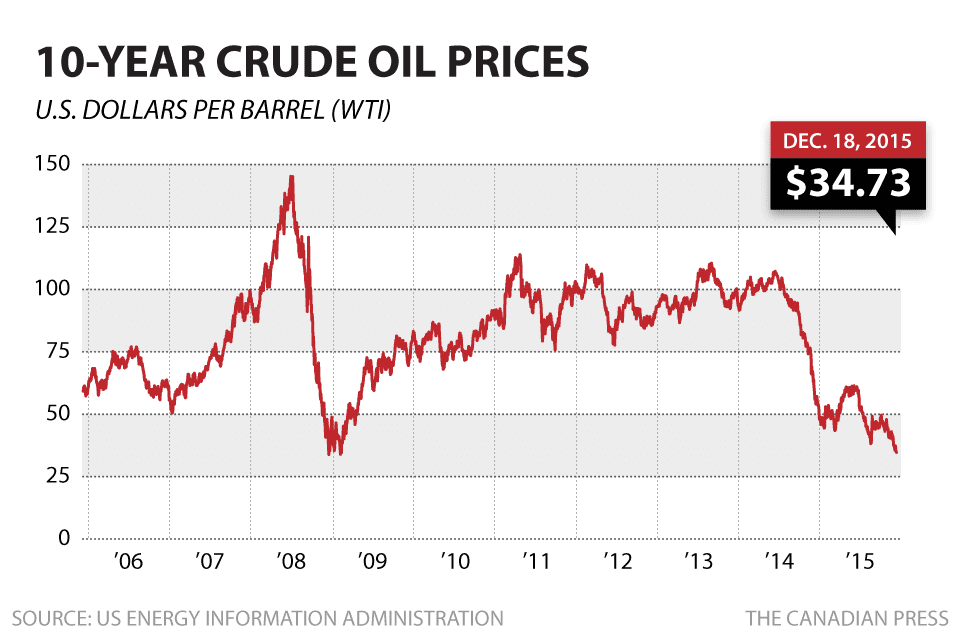
So far this year we have cancelled 5 weeks worth of courses in or for the Middle east, which is not surprisingly dominated by the oil and gas industry.  The dramatic fall in the price of oil (currently about $41/barrel down from over $100) has meant a massive cut in spending on training across the ME and in particular the oil and gas sector.

Now I have a vested interest in this because I work as a trainer, but I think we should make the case that training in procurement and supply (above other things) should be protected because it should pay for itself.

The usual argument is that when there is a financial shock it is sensible to cut back on discretionary spend - don't spend money unless you have to.  And I don't argue with that. 

However Procurement in the oil and gas industries in recent years has been focussed on Quality, delivery, availability, effectiveness and other non-price issues.  The high price of oil, and the relatively high margins it gave, meant that Price was not the dominant issue.  Now we are in a different environment.

Now Safety and Quality are things that cannot be comprised in process industries, but we can pivot to put far greater emphasis on price and cost rather than issues such as flexibility or efficiency.  That does require a change within the organisation, and a change in emphasis for the Procurement team and Suppliers.

In some situations that may mean a focus on partnership and joint cost reduction.  In others it may moving to a much more adversarial relationship than before.  The trick is in deciding where and when.

Which is where training comes in.  Training is not just about learning new things.  It is also where we can go back to basics and build up again in a new pattern.  It is where we can challenge established ideas and established ways of thinking.  It is where we can learn from others and test new concepts in a risk free (or low risk) environment.  In good training it is where we can plan how we are going to deliver in this new world.

In short a Procurement and Supply Chain training course could, and perhaps should, allow delegates to come away to save ten or more times the cost of the training.  At the least delegates should come away with some plans to save the cost of the event within a tight timescale (perhaps 3 months).  Those savings will then repeat over coming months adding multiples to the overall cost reduction.

The Return on Investment on Procurement training is high anyway, but when you need to save a lot of money in a hurry it is even better.  Particularly if it allows you to avoid making "savings" that will in the end cost more through lost production.

OK, you can say that I am self-serving in making this argument, but I think it makes sense.  In a losing football team you need to stop conceding goals.  You don't do that by getting rid of the Goalkeeper.

Wednesday, 21 December 2011

New London Training courses for Oil and Gas industry in 2012

I shall be presenting a new range of courses in London in 2012.  They are aimed at the oil and gas industry, but most will have much wider applications than that.  Contact me for further details.
20th February - 24th February 2012
Best Practices in Procurement Management for Oil, Gas and Petrochemicals
Effective Purchasing and Supply for the Oil and Gas Industry

20th February - 2nd March
Advanced Procurement Management for Oil, Gas and Petrochemicals

27th February - 2nd March
Effective Project Procurement Management for Oil, Gas and Petrochemicals

26th March - 30th March
Successful Negotiation in Procurement and Sourcing

16th April - 20th April
Maximising Performance via Supply Chain Management in Oil, Gas and Petrochemicals

14th May - 18th May
International Sourcing and Purchasing for Oil, Gas and Petrochemicals

14th May - 25th May
The Complete Programme for Sourcing and Purchasing within the Oil, Gas and Petrochemicals Fields

21st May - 25th May
Advanced International Sourcing and Purchasing for Oil, Gas and Petrochemicals

11th June - 15th June
Effective Purchasing and Supply for the Oil and Gas Industry

2nd July - 6th July
Effective Project Procurement Management for Oil, Gas and Petrochemicals

17th September - 28th September
The Complete Programme for Sourcing and Purchasing within the Oil, Gas and Petrochemicals Fields

24th September - 28th September
Advanced International Sourcing and Purchasing for Oil, Gas and Petrochemicals

1st October - 5th October
Best Practices in Procurement Management for Oil, Gas and Petrochemicals

1st October - 12th October
Advanced Procurement Management for Oil, Gas and Petrochemicals

8th October - 12th October
Effective Project Procurement Management for Oil, Gas and Petrochemicals 
26th November - 30th November
Maximising Performance via Supply Chain Management in Oil, Gas and Petrochemicals 
3rd December - 7th December
Successful Negotiation in Procurement and Sourcing

Saturday, 24 July 2010

OPEC


Apologies for the lack of entries. It is tremendously busy at the moment. Much of which I am not able to write about.

What I can talk about though is that I recently had the opportunity to visit OPEC in Vienna. A very interesting event, and there were 3 key messages that they put out.
First, they are not a Cartel
Second, $70 a barrel is a reasonable price for oil, and
Third, better that countries set the price of oil than the British Army

Interesting key messages. Their argument on Cartels is that this is an association of willing participants. There are oil producers not involved (such as the USA which does not export), who are free to set their own prices. Any OPEC member is also free to disregard anything agreed and go their own way with no consequence. They do not set prices as such.

The price for oil is not going down to $25 again in the near future, and if they have their way not at all. The world recession was caused by banks, not the price of oil so they feel confident that they can leave it at $70. The price anyway is set by traders and speculators, who were the ones who drove it up to $150 - not OPEC. This relatively high price will allow them to invest in extraction capacity for the next 20 years.

Finally, as the USA seems to line up to attack BP over the Gulf of Mexico oil disaster and the Lockerbie bomber and Libya, it is worth remembering why the comments about the British Army were so forcefully made. BP of course used to be Anglo-Iranian oil, and was implicated in the establishment of the Shah of Iran and the overthrow of a democratic government. The UK has in the past 100 years had some role in overseeing most of the OPEC members, and as far as oil goes we ran them as pretty much client states. The UK and other western powers did dictate the price of oil, and backed it up by force of arms. This still rankles. Well naturally. I believe the UK spy is a stock villain on Iranian tv to this day. It may not suit us, but you can understand their point of view that it is their economic asset, and how it is used should be determined by the owners of that asset not by the users through use of force. Those days are long gone, despite what people think about the invasion of Iraq, but the worry is still there. We have many bridges to build to overcome that history (which is largely forgotten in the west).

And in the meantime, I suggest we put a lot of resources into alternative energy. In purchasing terms it is never a good idea to be beholden to a key supplier with a grudge.